




|
This item has been sold |
| 15 | |
| times |


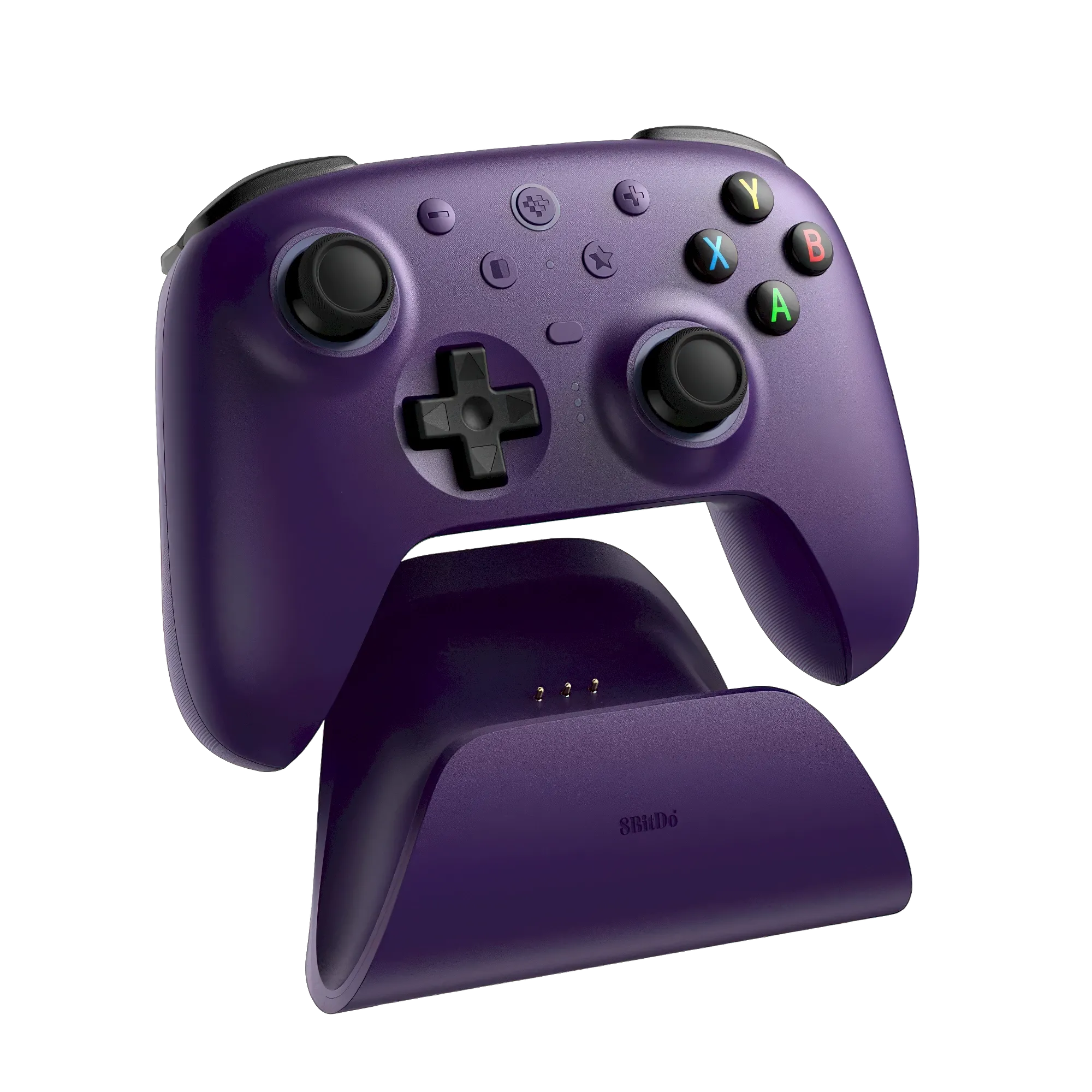


8BitDo Ultimate 2 Bluetooth/2.4G Controller with Dock (PC, Android, Steam Deck)

The 8BitDo Ultimate 2 is a premium wireless controller with Hall sensor sticks, charging dock, and incredible versatility across all your gaming platforms.
- Hall Effect TMR sticks eliminate stick drift permanently
- Connects via Bluetooth, 2.4GHz dongle, or USB-C for maximum compatibility
- Includes elegant charging station with built-in dongle storage
- Programmable macros, button remapping, and 3 customizable profiles
- Works with PC, Steam Deck, Android, Switch and retro consoles
- 22 hours battery life with motion controls and vibration
The wireless controller that does it all - and does it better than the rest
If you're tired of dealing with stick drift, limited compatibility, or mediocre build quality, the 8BitDo Ultimate 2 Controller is your answer. This isn't just another gamepad - it's engineered to be the last controller you'll ever need, featuring cutting-edge Hall Effect technology, professional-grade features, and versatility that puts console-specific controllers to shame.
Hall Effect Technology: Say Goodbye to Stick Drift Forever
The Ultimate 2 features TMR (Tunnel Magneto Resistance) Hall sensor analog sticks that use magnetic fields instead of physical contact points. What does this mean for you? Zero stick drift, even after years of intense gaming sessions. While traditional potentiometer-based sticks wear out and develop the dreaded drift, your Ultimate 2 will feel factory-fresh for its entire lifespan. It's the kind of innovation that should be standard on all controllers.
Connect to Everything, Everywhere
Whether you're gaming on your PC, Steam Deck, Android phone, or even using Bluetooth receivers for retro consoles, the Ultimate 2 has you covered. Switch seamlessly between Bluetooth mode for wireless freedom or use the included 2.4GHz USB-C dongle for lag-free performance. The dongle cleverly stores in the charging station when not in use, so you'll never lose it. USB controller support means you can plug and play on virtually any device without complicated pairing processes.
Premium Features for Serious Gamers
With six shoulder buttons, two programmable back paddles, clickable Hall sensor sticks, precision motion controls, and rumble vibration, you're equipped for any gaming challenge. The Xbox-style ABXY layout feels instantly familiar, while the responsive D-pad handles fighting games and retro platformers with ease. The customizable RGB light ring around each stick adds a touch of style to match your setup.
Programmability That Adapts to Your Playstyle
Using 8BitDo's Ultimate Software (available for PC and mobile), you can create macros, remap any button, adjust stick sensitivity curves, and set up rapid-fire functions. Save up to three complete profiles and switch between them instantly during gameplay with the dedicated profile button. Create one setup for shooters, another for fighting games, and a third for platformers - the choice is yours.
The Charging Station Makes Life Easy
The included charging dock isn't just functional - it's beautiful. Your controller sits securely in the station, charging via contact points (no fumbling with cables), while the 2.4GHz dongle stores safely inside. With up to 22 hours of playtime per charge and only 2-3 hours charging time, you'll rarely find yourself without power. Plus, your gaming setup looks that much more professional.
The 8BitDo Ultimate 2 Controller represents everything modern controller technology should be: reliable, versatile, feature-rich, and built to last. Whether you're a competitive gamer, casual player, or retro enthusiast, this is the ultimate gamepad that truly lives up to its name.

- System
- Android
Apple
SteamOS
Windows PC - Controller type
- Gamepad
- Special features
- Gyroscope
Vibration - Battery category
- Secondary, 1-50g
- Battery capacity (mAh)
- 1000
- Controller connector
- USB
- Connection type
- 2.4 GHz wireless
Bluetooth
Wired - Number of analog sticks
- 2
- Connection compatibility
- 2.4 GHz wireless (Windows)
Bluetooth (Android/Apple)
Wired (Windows) - Stick technology
- TMR
- Trigger technology
- Linear Hall + tactile trigger mode
- Controller layout
- Gamepad
Nintendo ABXY (SNES / Switch) - Motion control
- Yes (2.4G, configurable)
- Vibration
- Yes
- 3.5 mm audio
- No
- Extra/back buttons
- 2 back paddles
3 profiles
L4/R4
RGB - Remapping/software
- Ultimate Software V2
- Charging dock included
- Yes
- Input modes (USB)
- XInput
- Input modes (Bluetooth)
- DInput
- Input modes (2.4 GHz)
- XInput
- Input mode switching
- Windows: XInput via USB or 2.4G dongle. Bluetooth: DInput (Android/SteamOS/Apple with supported OS). DInput over 2.4G is firmware-dependent and not entered without verification.
- Deadzone adjustment
- Zero deadzone toggle on controller
- Stick calibration
- On controller
Practical answers about compatibility, features and how things work.
What input modes are available: XInput, DInput, Switch and PlayStation?
XInput is the best choice for most PC gamers. This widely supported input mode follows the Xbox controller layout and is recognized directly by many modern Windows games. For most users, that is all they need. However, XInput support does not automatically mean a controller works on a real Xbox console.
DInput (DirectInput) is the older Windows standard. Some older PC games, such as Crimson Skies or Need for Speed: Underground 2, support DirectInput but not native XInput.
An additional DInput or generic USB HID mode can also be useful for retro gaming systems, FPGA devices, emulators and other specialized setups. Some devices support Xbox-compatible controllers, while others expect a standard USB HID gamepad. Which input modes work depends on the specific device and its software.
For example, MiSTer FPGA supports many USB controllers as well as Xbox-compatible input devices. Depending on the core, different button mappings or special input features may be required. DInput itself is therefore not a general requirement on MiSTer.
If you plan to use your controller with retro or FPGA systems, check which input modes are supported beforehand. A controller with several selectable modes offers more flexibility.
Switch mode makes the controller appear to compatible devices as a Nintendo Switch Pro Controller. It can be useful beyond the Switch: Steam Input, Linux and various applications can also support these controllers. However, not every PC game will recognize this mode automatically.
PlayStation mode can refer to different compatibility modes depending on the controller, such as PS4 controller or PlayStation Classic modes. There is no single universal PlayStation mode. Compatibility with a particular PlayStation console must be explicitly confirmed for the product.
Connection type matters: Not every input mode is available over every connection. Some controllers support DInput only via a USB cable, while others also offer it through a 2.4 GHz receiver or Bluetooth.
That is why our technical specifications list confirmed input modes separately for USB, 2.4 GHz and Bluetooth.
What is the difference between 2.4 GHz wireless and Bluetooth controllers?
Both types of connection are wireless and use the 2.4 GHz frequency band. The difference is the transmission technology: Bluetooth is a widely used standard, whereas “2.4 GHz wireless” usually refers to a manufacturer's own radio link with a matching receiver.
Bluetooth: flexible and widely compatible
Many PCs, gaming handhelds, smartphones, tablets and consoles support Bluetooth controllers. If the controller is compatible with the device, you usually pair it once through the Bluetooth settings. After that, it will normally reconnect automatically.
No additional receiver is needed, leaving a USB port free.
However, not every Bluetooth-enabled device supports every Bluetooth controller. Game consoles in particular may require certain controller models or input modes.
2.4 GHz wireless: plug in and play
Controllers using 2.4 GHz wireless usually come with a matching USB receiver (dongle). Plug it in and switch the controller on. The two are often paired already.
This offers several advantages:
- No Bluetooth menu or Bluetooth manager setup is needed.
- It also works with compatible devices that have no built-in Bluetooth.
- Many systems recognize the receiver as a regular USB controller.
- That can be particularly useful for PCs, retro systems and other devices with USB ports.
The device must still support the particular receiver and its input mode. Not every dongle automatically works with every system. Some retro controllers also use dedicated receivers for particular consoles.
What about speed?
Many 2.4 GHz controllers offer high polling rates and low, consistent latency. Modern Bluetooth controllers can also be very fast, however. Actual performance depends on the specific controller and connection.
Which connection should I choose?
Bluetooth is especially useful if you want to use a controller with different compatible devices without carrying an extra receiver.
2.4 GHz wireless is often a good choice if you want a straightforward setup, prefer a responsive connection, or use a device without Bluetooth.
Check the product's technical specifications to see which connections and systems it supports.
What do polling rate and latency mean for a controller?
Polling rate and latency both affect how quickly a controller responds to your inputs, but they describe two different things.
What is polling rate?
Polling rate describes how often the controller or its connection reports or requests new input data from the system.
It is measured in hertz (Hz).
| Polling rate | Reporting interval |
|---|---|
| 125 Hz | 8 milliseconds |
| 250 Hz | 4 milliseconds |
| 500 Hz | 2 milliseconds |
| 1,000 Hz | 1 millisecond |
The higher the polling rate, the shorter the interval between input reports can be.
A high polling rate can therefore be useful in fast-paced games. The connected system must also support the relevant reporting rate.
What is latency?
Latency is the delay between an action on the controller and the moment the system registers that input.
Several factors contribute to this delay:
- How quickly the controller detects and processes the button press.
- How long transmission via cable, Bluetooth or 2.4 GHz wireless takes.
- How quickly the connected system processes the input.
Before the action becomes visible on the screen, the game and display introduce additional processing delays.
Does a 1,000 Hz polling rate automatically mean 1 ms of latency?
No. At 1,000 Hz, only the reporting interval is one millisecond. The total input delay can be considerably higher.
In practice, a well-optimized controller running at 500 Hz can therefore respond faster than a poorly optimized controller running at 1,000 Hz.
Which values matter?
For most games, consistently low latency matters more than the highest possible polling rate.
Low delays can be especially beneficial for fast action games, shooters and competitive games. In retro games, processing by emulators, consoles or FPGA systems and the display also matter.
Our tip: A high polling rate is an interesting technical specification, but does not by itself prove that a controller is fast. Measurements of real-world latency under comparable conditions are more meaningful.
What are Hall effect and TMR sticks, and how do conventional analog sticks work?
Modern controllers are often advertised as having Hall effect or TMR sticks. Both technologies aim to provide precise, long-lasting analog sticks. How do they differ from conventional designs?
Conventional analog sticks: potentiometers
Traditional analog sticks use potentiometers, in which a small electrical wiper moves along a resistive track.
The resulting change in electrical resistance is measured to determine the stick's position. Typically, two potentiometers are used to measure horizontal and vertical movement.
The drawback is that the resistive tracks can wear over time due to mechanical contact. Dust and dirt can also interfere with the measurement. One possible result is stick drift: the controller registers movement even though the stick is not being touched.
Hall effect sticks: magnetic sensing without electrical contact
Hall effect sticks use magnets and specialized sensors to determine the position of the analog stick.
They measure changes in a magnetic field, so they do not require the electrical wiper contact used by conventional potentiometers.
This removes a common source of wear. Hall effect sticks are therefore much less susceptible to stick drift caused by worn potentiometer contacts.
TMR sticks: a different magnetic sensor technology
TMR stands for Tunnel Magnetoresistance.
Like Hall effect sticks, TMR sticks sense their position without electrical contact, using magnets. However, the measurement principle is different: the sensors detect changes in electrical resistance caused by the magnetic field.
TMR sensors can be particularly sensitive to small changes and, depending on their design, may consume less power than comparable Hall sensors.
That does not automatically mean every TMR controller is more precise or has better battery life. The electronics, calibration and processing of the sensor readings matter as well.
Are Hall effect and TMR sticks completely immune to stick drift?
No. Both technologies avoid wear of the conventional electrical wiper contacts, but the sticks still contain mechanical components.
For example, return springs can wear, dirt can obstruct movement, and calibration problems can occur. Hall effect and TMR sticks can therefore still report unintended movement.
However, the risk of classic stick drift caused by worn potentiometer tracks is significantly reduced.
How do the triggers (shoulder buttons) work?
Analog triggers, such as LT/RT or L2/R2, can use similar sensing methods:
- Potentiometer triggers: Trigger position is measured through a change in electrical resistance.
- Hall effect triggers: Position is measured without electrical contact, using a magnetic field. This eliminates wear from an electrical wiper contact.
- Digital triggers: These work like regular buttons and detect only whether they are pressed. They do not measure a continuously variable position.
Analog triggers are useful in racing games, for example, because they allow fine control over acceleration and braking. Digital triggers can be useful in games that only need a quick button press.
Which technology is best?
Well-designed Hall effect and TMR sticks offer clear advantages over conventional potentiometers in terms of sensor wear.
TMR may also offer benefits in sensitivity and power consumption. However, a well-designed Hall effect stick can perform just as well as, or better than, a poorly designed TMR stick.
Besides the sensor technology, the mechanics, calibration and overall quality of the controller are equally important.
What is the difference between 8BitDo Pro and Ultimate controllers?
At 8BitDo, “Ultimate” does not automatically mean “better” than “Pro”. The main difference between the two series is their shape and the arrangement of the D-pad and analog sticks.
Pro series: Inspired by classic SNES and PlayStation controllers. The D-pad sits at the upper left, with the left analog stick below it. The two analog sticks are symmetrically positioned. This layout appeals to fans of classic controllers and players who often use the D-pad.
Ultimate series: Inspired by modern Xbox and Nintendo Switch Pro controllers. Here the positions are reversed: the left analog stick is at the upper left, with the D-pad below it. The analog sticks are offset.
Important: The series name does not tell you which controller has more features or better technology. Connectivity, supported platforms, stick technology, triggers and extra features vary by model. Choose based on your preferred layout and the individual controller's specifications.
How do I toggle zero-deadzone mode and calibrate the 8BitDo Ultimate 2 Wireless sticks?
On the 8BitDo Ultimate 2 Wireless Controller (PC/Android), you can toggle zero-deadzone mode directly on the controller: with the controller powered on, hold Minus (−) + Plus (+) for about 5 seconds. This switches the mode on or off.
Calibrate sticks and triggers: With the controller powered on, hold LB + RB + Minus (−) + Plus (+) for about 8 seconds until the status LED blinks. Slowly rotate each analog stick fully against its outer edge two or three times, then press the triggers to their stops two or three times. Press the same four-button combination again to finish.
Do not confuse the two-button deadzone toggle (5 seconds) with the four-button calibration shortcut (8 seconds). Recalibration is only needed if inputs behave incorrectly. On the Switch/PC Ultimate 2 Bluetooth variant, zero-deadzone mode is adjusted using software instead.
Manufacturer
EU responsible person


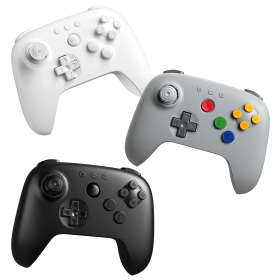
8BitDo 64 Bluetooth Controller (Analogue 3D, Switch, PC, Android)
Bluetooth for Nintendo Switch, Switch 2, Android & Windows
Hall Effect analog stick – no stick drift
Classic N64 button layout (A, B + 4 yellow C-buttons, L/R/Z)
Built-in rumble, button remapping & turbo function
Charges via USB-C
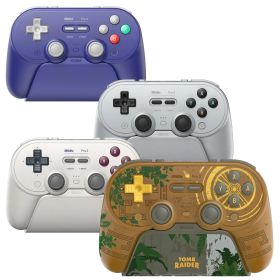
8BitDo Pro 3 Controller (Switch, PC, Steam Deck, Android, iOS, macOS)
Three connection modes: Bluetooth, 2.4G wireless adapter, and wired USB for maximum compatibility
Premium TMR joysticks and Hall Effect triggers for drift-free precision and durability
Unique swappable magnetic ABXY buttons let you physically rearrange your button layout
Compatible with Switch 1 & 2, Windows PC, Apple devices, SteamOS, and Android
Includes charging dock, 2.4G adapter, ball-top joystick caps, and button puller tool
Pro back paddle buttons (L4/R4) and 1000mAh rechargeable battery for extended gaming sessions

8BitDo Ultimate 2C Wired Controller (PC, Android)
Hall effect sticks and triggers for exceptional precision and durability
1000Hz polling rate for lightning-fast responsiveness
Four shoulder buttons (L1/R1/L4/R4) plus rumble feature
Compatible with Windows PC and Android devices
Customizable button mapping via dedicated software
USB-C wired connection for zero-latency gaming
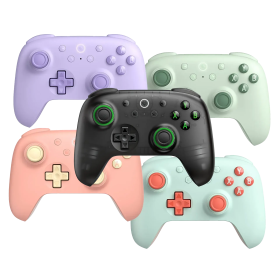
8BitDo Ultimate 2C 2.4G Controller (PC, Android)
Hall effect sticks and triggers for superior precision and durability
Works with Windows PC and Android via 2.4GHz, Bluetooth, or USB cable
Impressive 1000Hz polling rate when using the included 2.4G dongle
Six shoulder buttons (L1/R1, L2/R2, L4/R4) for extra flexibility
Up to 32 hours battery life via Bluetooth, 25 hours via 2.4GHz
Fully customizable button mapping through dedicated software

8BitDo Pro 2 Hall Edition (Switch, PC, macOS, Android)
Hall effect analog sticks for enhanced precision and durability
Connect wirelessly via Bluetooth 4.0 or wired with USB-C cable
Two programmable back paddle buttons for competitive advantage
6-axis motion sensor and customizable vibration feedback
Store up to 3 custom profiles, switch on-the-fly
Compatible with Windows PC, Switch, macOS, Linux and more
8Bitdo Wireless USB Adapter 2
8BitDo M30 Bluetooth Gamepad (Switch, PC)
Authentic 6-button layout inspired by the iconic Sega Genesis controller
Wireless Bluetooth connectivity for PC, Mac, Android, Nintendo Switch and more
Works with original consoles via 8BitDo Retro Receiver (sold separately)
Rechargeable battery for extended wireless gaming sessions
X-input and D-input support plus wired USB mode included
Regular firmware updates add new system compatibility
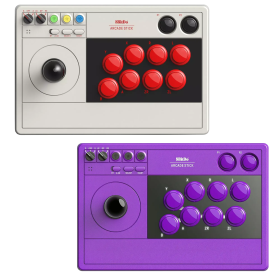
8BitDo Arcade Stick (Switch, PC, Android, Raspberry Pi)
Connect via Bluetooth, 2.4GHz wireless, or USB-C cable
Compatible with PC, Nintendo Switch, Android, and Raspberry Pi
Ultra-moddable design supports Sanwa, Seimitsu, Happy & IL parts
40-hour battery life with 1000mAh rechargeable battery
Customizable button mapping with macro support
Quick-toggle switch between D-pad, left stick, and right stick modes
8BitDo 64 Bluetooth Controller (Analogue 3D, Switch, PC, Android)
Bluetooth for Nintendo Switch, Switch 2, Android & Windows
Hall Effect analog stick – no stick drift
Classic N64 button layout (A, B + 4 yellow C-buttons, L/R/Z)
Built-in rumble, button remapping & turbo function
Charges via USB-C
8BitDo Pro 3 Controller (Switch, PC, Steam Deck, Android, iOS, macOS)
Three connection modes: Bluetooth, 2.4G wireless adapter, and wired USB for maximum compatibility
Premium TMR joysticks and Hall Effect triggers for drift-free precision and durability
Unique swappable magnetic ABXY buttons let you physically rearrange your button layout
Compatible with Switch 1 & 2, Windows PC, Apple devices, SteamOS, and Android
Includes charging dock, 2.4G adapter, ball-top joystick caps, and button puller tool
Pro back paddle buttons (L4/R4) and 1000mAh rechargeable battery for extended gaming sessions
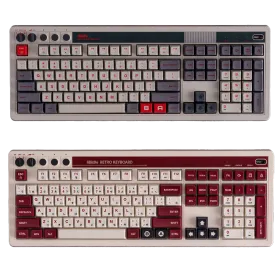
8BitDo Retro 108 Mechanical Keyboard with Numblock (BT, 2.4G, USB)
8BitDo Ultimate 2C Wired Controller (PC, Android)
Hall effect sticks and triggers for exceptional precision and durability
1000Hz polling rate for lightning-fast responsiveness
Four shoulder buttons (L1/R1/L4/R4) plus rumble feature
Compatible with Windows PC and Android devices
Customizable button mapping via dedicated software
USB-C wired connection for zero-latency gaming
8BitDo Ultimate 2C 2.4G Controller (PC, Android)
Hall effect sticks and triggers for superior precision and durability
Works with Windows PC and Android via 2.4GHz, Bluetooth, or USB cable
Impressive 1000Hz polling rate when using the included 2.4G dongle
Six shoulder buttons (L1/R1, L2/R2, L4/R4) for extra flexibility
Up to 32 hours battery life via Bluetooth, 25 hours via 2.4GHz
Fully customizable button mapping through dedicated software
8BitDo Pro 2 Hall Edition (Switch, PC, macOS, Android)
Hall effect analog sticks for enhanced precision and durability
Connect wirelessly via Bluetooth 4.0 or wired with USB-C cable
Two programmable back paddle buttons for competitive advantage
6-axis motion sensor and customizable vibration feedback
Store up to 3 custom profiles, switch on-the-fly
Compatible with Windows PC, Switch, macOS, Linux and more
8Bitdo Wireless USB Adapter 2
8BitDo M30 Bluetooth Gamepad (Switch, PC)
Authentic 6-button layout inspired by the iconic Sega Genesis controller
Wireless Bluetooth connectivity for PC, Mac, Android, Nintendo Switch and more
Works with original consoles via 8BitDo Retro Receiver (sold separately)
Rechargeable battery for extended wireless gaming sessions
X-input and D-input support plus wired USB mode included
Regular firmware updates add new system compatibility
8BitDo Arcade Stick (Switch, PC, Android, Raspberry Pi)
Connect via Bluetooth, 2.4GHz wireless, or USB-C cable
Compatible with PC, Nintendo Switch, Android, and Raspberry Pi
Ultra-moddable design supports Sanwa, Seimitsu, Happy & IL parts
40-hour battery life with 1000mAh rechargeable battery
Customizable button mapping with macro support
Quick-toggle switch between D-pad, left stick, and right stick modes